
The nano banana ai image generator is shifting the landscape. For the past two years, the trend has been “bigger is better.” We have seen models balloon in size, requiring massive GPUs and expensive cloud subscriptions just to render a simple concept.
But recently, efficiency has become the new gold standard. Developers and creators are no longer just asking “How realistic is it?” but “How fast is it?” and “Can I run it without burning a hole in my wallet?”
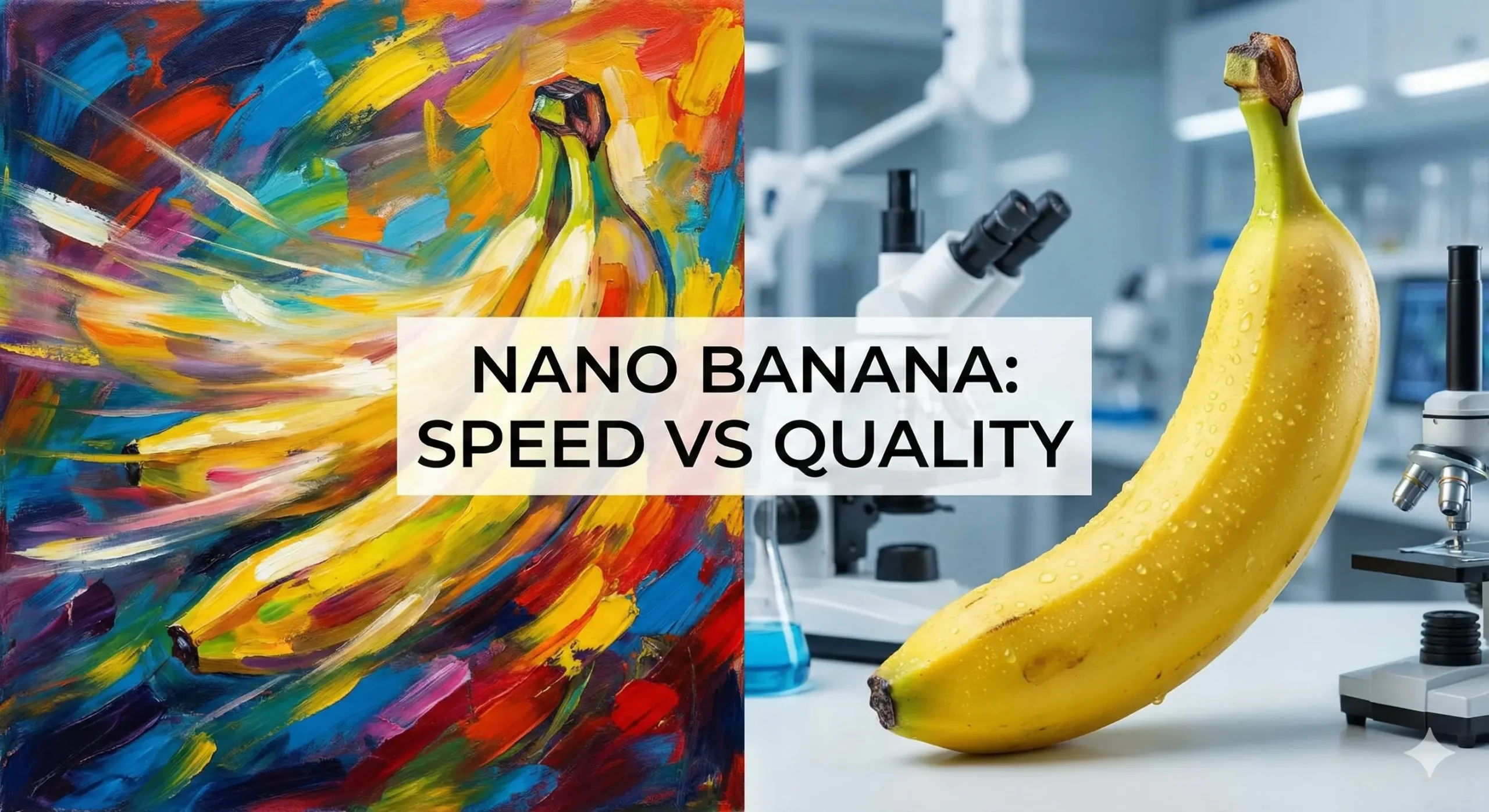
Enter the Nano Banana model. This tool promises to break the heavy-compute cycle by offering a lightweight, high-speed alternative that doesn’t compromise on artistic quality. But how does it actually stack up against the titans of the industry? And more importantly, is the “Pro” upgrade necessary for your workflow?
We put both versions to the test on the BanaGen platform to find out.
Why the Nano Banana AI Image Generator Matters
Before we compare the versions, it is important to understand why the nano banana ai image generator is getting so much attention.
Most major AI models are bloated. They carry billions of parameters that, while powerful, often result in slow generation times (latency). Nano Banana takes a different approach. It is optimized for what engineers call “inference efficiency.”
In plain English? It skips the unnecessary calculations. It creates images that look 95% as good as the heavyweights, but it does it in a fraction of the time. For creators who need to iterate quickly—like concept artists, storyboarders, or marketing teams—this speed is a game-changer.
Nano Banana Standard: The Speedster
I started my testing with the standard version. My first impression was simple: speed.
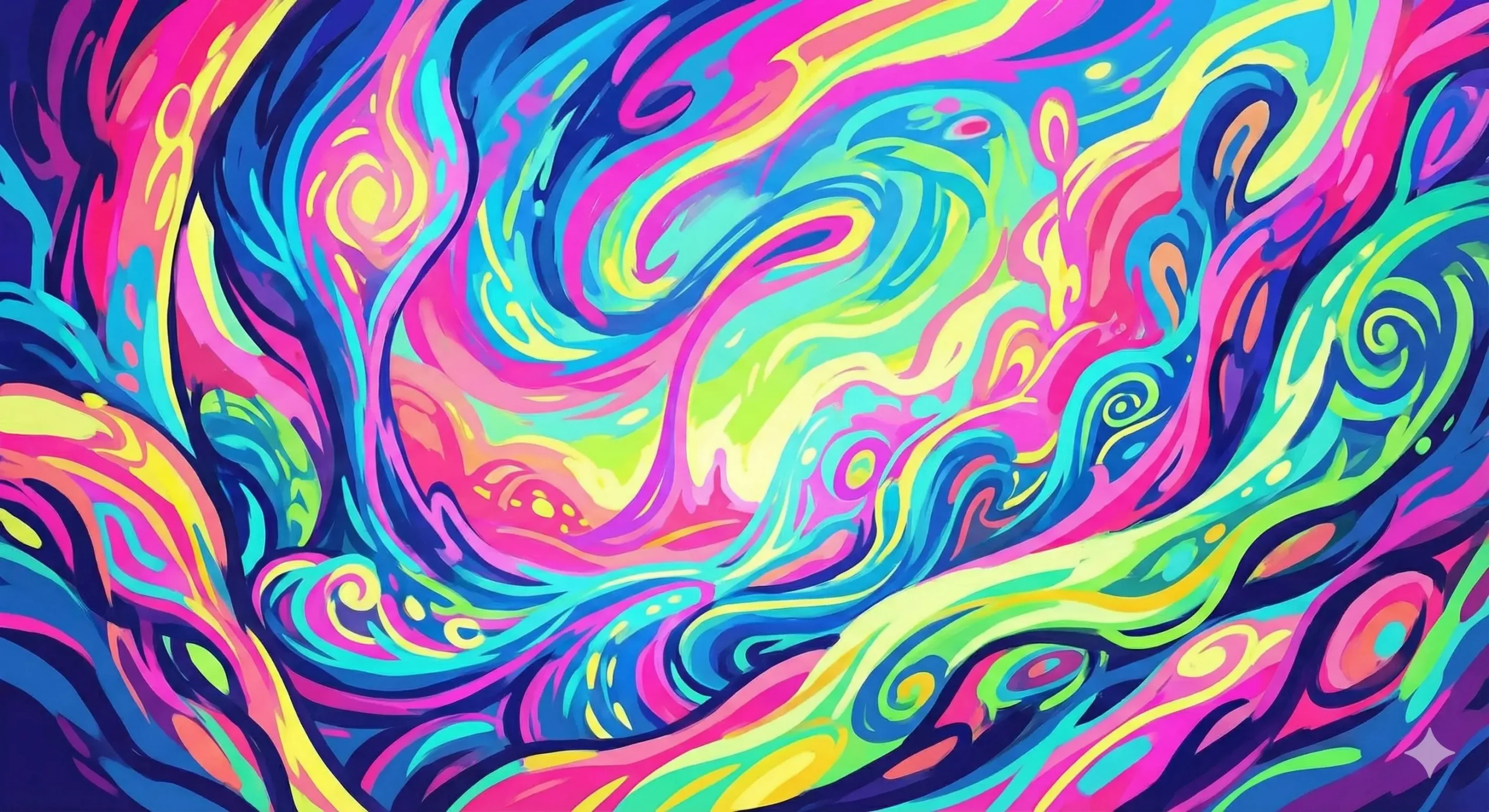
When you hit “Generate,” there is almost no lag. The image pops up nearly instantly. The Standard model excels at abstract concepts, digital art styles, and vibrant illustrations. It is forgiving with prompts; you don’t need to write a paragraph of text to get something usable.
However, it does have its limitations. If you are looking for hyper-realistic skin textures or complex architectural diagrams with perfect straight lines, the Standard model might struggle slightly. It is designed for creativity and ideation, not necessarily for photorealism.
Best for:
- Social media managers needing quick visuals.
- Bloggers creating featured images.
- Rapid brainstorming sessions.
Nano Banana Pro: Precision and Control
Switching over to the Nano Banana Pro, the difference was immediately noticeable. While the Standard version is about speed, the Pro version is about control.
The first thing I noticed was the prompt adherence. If I asked for “a cyberpunk street at night with neon blue lighting and wet pavement,” the Pro model respected every single element. The lighting engine seems significantly upgraded, handling shadows and reflections with a level of realism that the Standard version misses.
Another huge win for the Pro version is text handling. Small models usually fail miserably at rendering text (often producing alien hieroglyphs). Nano Banana Pro, however, manages to render short words and logos with surprising clarity.
Why upgrade to Pro?
- Better Composition: Subjects are centered better, and limbs/fingers (the enemy of all AI) are rendered more accurately.
- Style Consistency: Essential if you are creating a comic book or a series of consistent brand assets.
- Higher Resolution: The output is sharper, requiring less upscaling later.
Head-to-Head Comparison
To help you decide, here is a breakdown of how they perform in a real-world workflow.
| Feature | Nano Banana (Standard) | Nano Banana Pro |
| Render Speed | < 2 Seconds | ~4-5 Seconds |
| Photorealism | Average | High |
| Prompt Accuracy | Good for short prompts | Excellent for complex prompts |
| Text Rendering | Poor | Good |
| Cost Efficiency | Extremely High | High |
Suggested for you:
Where to Experience the Nano Banana AI Image Generator?
Not all platforms run these models efficiently. To truly get the best performance out of this architecture, you need a platform optimized for it.
Currently, the most stable and feature-rich implementation we have found is at BanaGen. They seem to have tuned the backend specifically for the nano architecture, resulting in faster load times than generic hosting services.
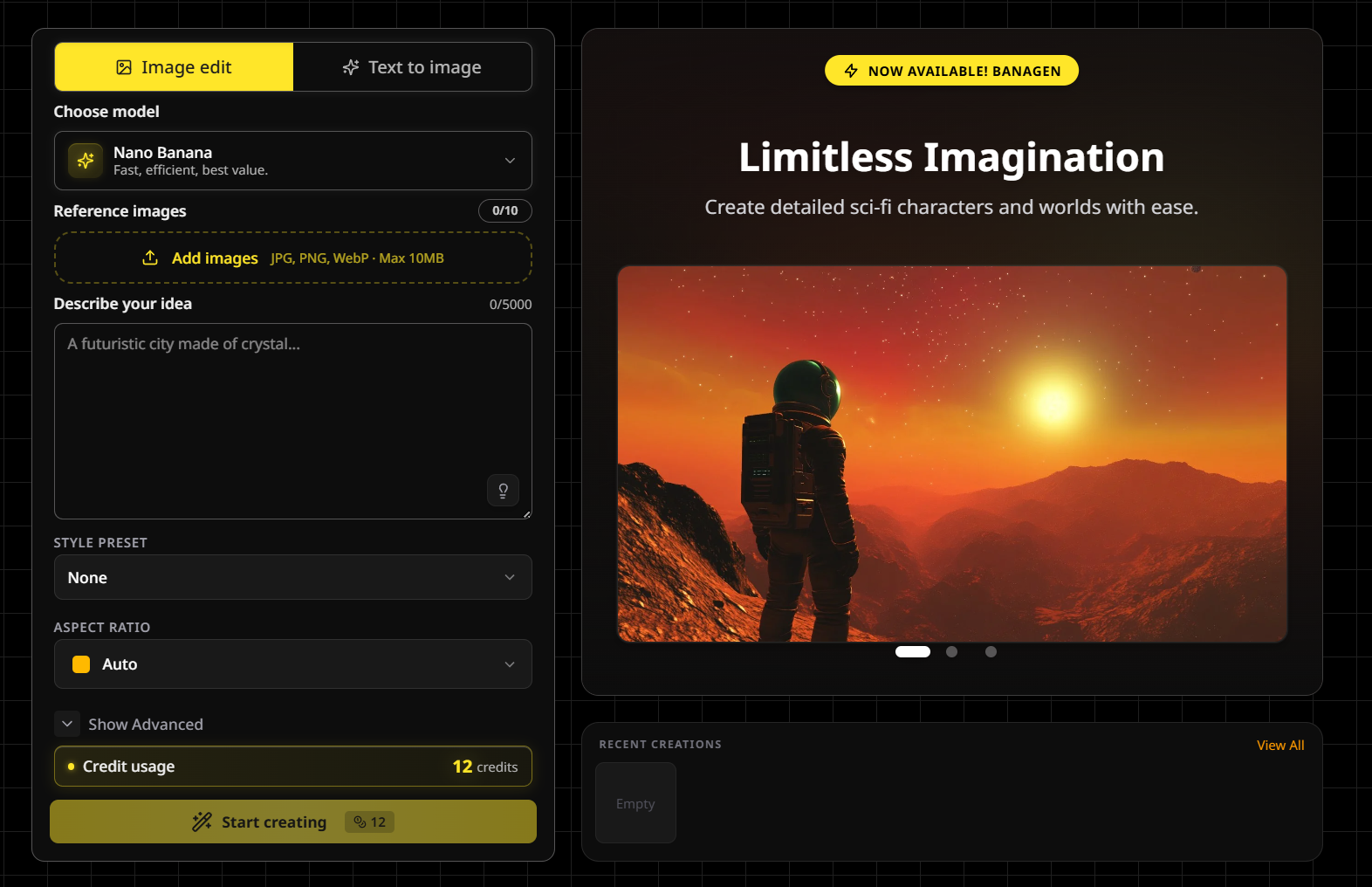
Whether you are using the free tier or the premium features, running the model through a dedicated platform like BanaGen ensures you are getting the latest model weights and the best possible generation speed.
Final Verdict: Which One is For You?
If you are just playing around or need abstract art for a personal blog, the Standard version will serve you well. It is fun, fast, and free of frustration.
However, if you are a professional looking to integrate AI into your production pipeline, the Pro version is the only logical choice. The jump in coherence and detail justifies the slight trade-off in speed.
The era of waiting 60 seconds for an image is over. Efficiency is here.
Ready to create?
Don’t just take my word for it. You can test both the Standard and Pro versions right now and see the difference in speed for yourself.
Try the tool directly at BanaGen.com today and start creating images in seconds, not minutes.